


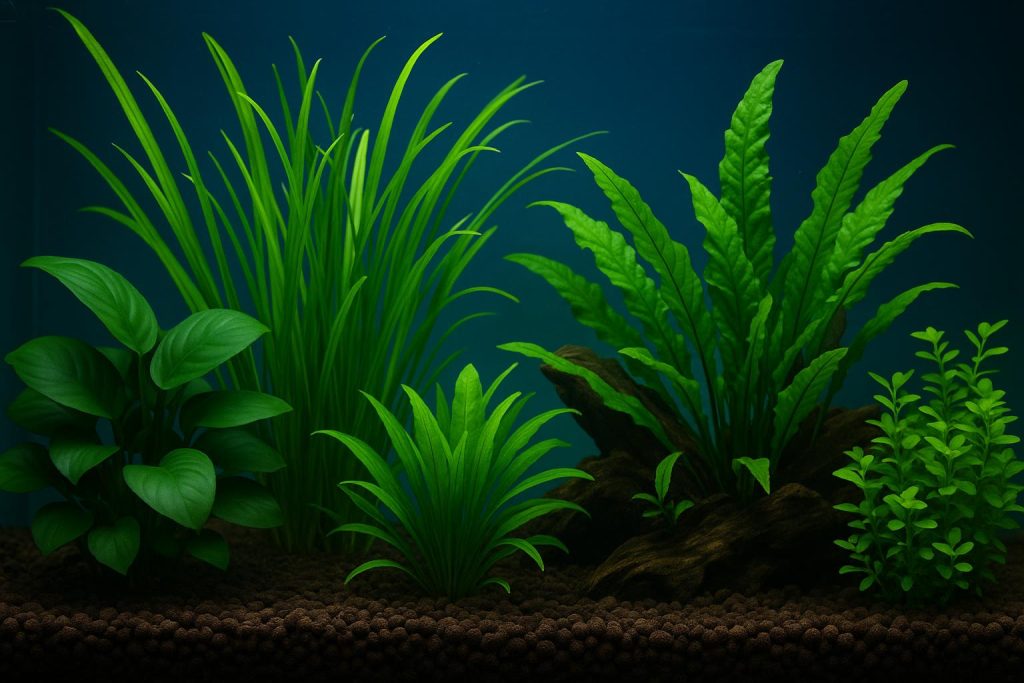
Decaying greenery in an aquarium is never a good sight for homeowners and their Lucerne Grand visitors. Health-wise, this would also affect the fish in your tank. Usually, the problem isn’t the aquatic plants themselves, but the lack of knowledge, time, and research to help sustain them. So, here are the 5 of the easiest, mostly self-sustaining plants to care for in your aquarium.
Floating Plants
Since all they do is float, hence the name, they get their nutrients from the water. In conclusion, all you have to do is keep your water packed with nourishment. This can already be done just by adding fish; their waste from food is enough to keep them alive. They have distinct types that come in different colors and sizes. Additionally, they can multiply on their own.
Anubias
Anubias come in different variants and are known mostly for being the toughest plants in the aquatic world. They are usually small to medium, meaning they can be applicable to any tank. However, you shouldn’t bury it too deep in the substrate, as it has rhizomes and might cause the ground to rot. It’s much more recommended to place them on driftwood, decor, and stones.
Java Moss
Besides being a great aquascaping tool, Java moss ranks alongside anubias as the easiest plant to care for. They don’t require much lighting and fertilization. And, you can put them anywhere in your tank, from the top of the decor and even submerged under the soil.
Amazon Sword
A largely known aquatic plant, the Amazon Sword consists of sharp sword-like leaves and grows very tall. They require minimal lighting and substrate and will still thrive with greenery. These, when placed at first, will not pop up quickly and tend to stay on the ground first. Just wait a few days, then it will perk up naturally.
Java Fern
Java ferns are hardy plants with green oval-like wavy leaves with a point at the top. They can sustain multiple water temperatures and don’t need much lighting. Much like anubias. It’s better to stick them to decorations as they also have rhizomes. These plants can multiply by themselves, with black spots that can slowly turn longer until you can cut them and replant them somewhere else.