Eloah Rocha is a child psychologist and counselor who has worked with Los Angeles Children’s Hospital for more than 20 years. Her work focuses on assessing and treating behavioral, developmental, and emotional challenges in children and adolescents while also supervising youth activity programs and child care staff. Throughout her career, Eloah Rocha has participated in studies involving patient-sibling interactions and coping strategies for children affected by illness within their families. Outside of her professional responsibilities, she supports charitable initiatives for children and women with breast cancer and volunteers in educational programs. Her interests in outdoor recreation, including swimming, biking, long-distance running, and meditation, align naturally with destinations such as Everglades National Park, where visitors can experience nature through hiking, wildlife observation, paddling, and other outdoor activities in one of the country’s most distinctive ecosystems.
A Visitor’s Guide to Everglades National Park
Everglades National Park, located on Florida’s southern tip, is a 1.5-million-acre protected area that is the most expansive subtropical wilderness in the country. This region has a steady flow of freshwater called the “river of grass. The United Nations Educational, Scientific, and Cultural Organization (UNESCO) recognizes it as an international biosphere reserve.
Notably, there are two primary visiting seasons. Running from November to March, the dry season offers the best wildlife experience. Animals usually congregate at remaining water holes, making them easy to view. Additionally, this season’s cool temperatures and low humidity make outdoor activities comfortable. The wet season from June to October brings intense heat, high humidity, and daily storms. Visitors should also be aware that there are many mosquitoes at this time.
There are four separate entrances, each providing access to a different section of the park. However, they do not connect internally. Visitors should choose routes leading to the places where they want to enjoy activities. For example, the Flamingo Visitor Center provides access to canoeing facilities, while the Royal Palm entrance is ideal for walking, featuring paved and dirt trails.
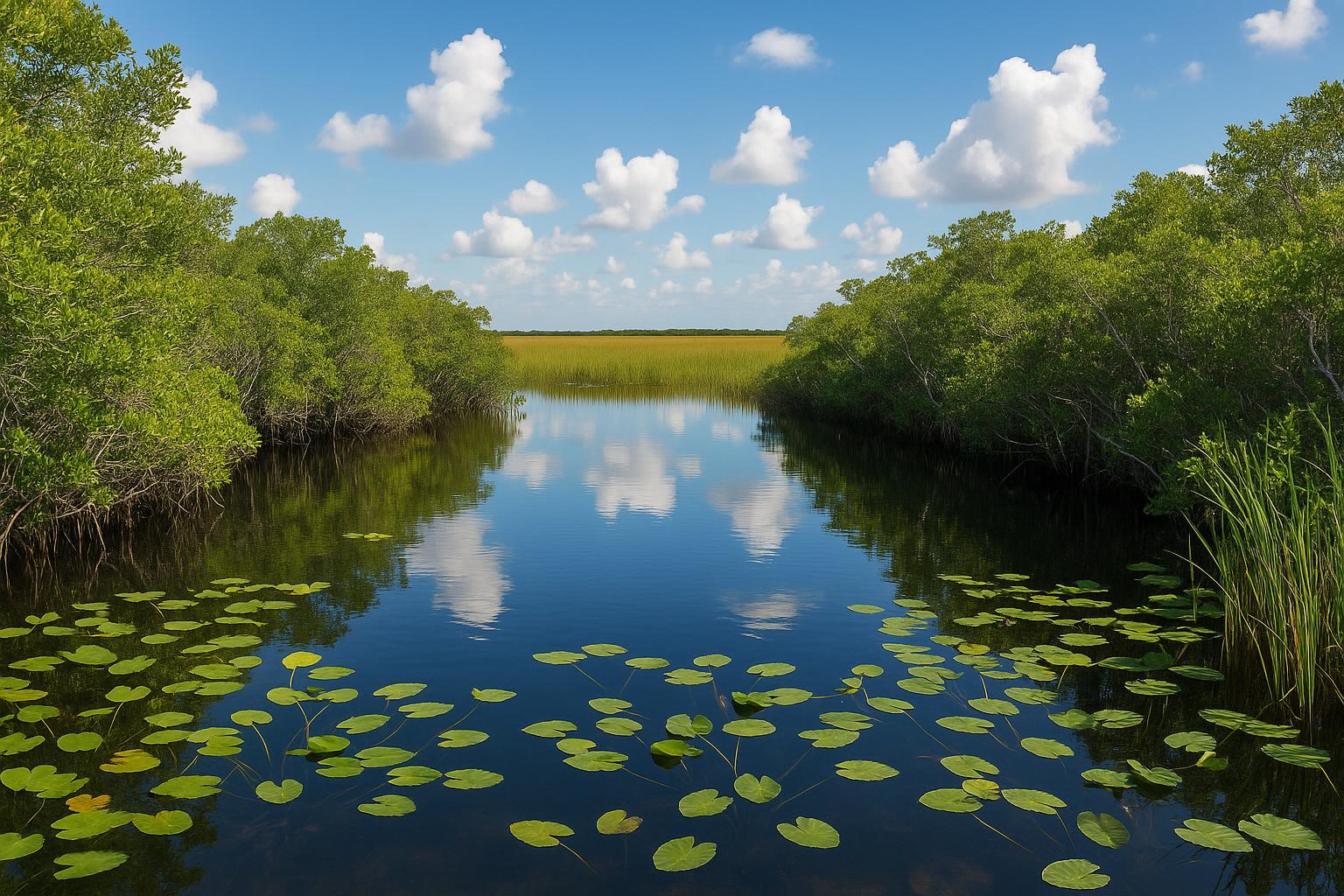
Everglades National Park has some natural features that make it attractive to many. The park has a limestone foundation that filters water and creates an environment unique to the region. This geological base supports the formation of diverse saltwater and freshwater ecosystems. There are extensive sawgrass prairies, while mangroves dominate the peninsula’s coastal fringe. Hardwood hammock areas are on high ground and comprise dense tropical tree islands with slow-moving shallow water surrounding them.
This park is the only area in the world where alligators and crocodiles coexist naturally. Over 400 bird species use the park as a refuge. One can see mammals such as the Florida panther here, though rarely. Bird species include the wood stork and the roseate spoonbill. Overall, each animal plays a role in an uninterrupted food chain, helping sustain a healthy ecosystem for future generations.
Adventure activities within the park cater to people of all ages. Those exploring the park’s interior use specialized watercraft designed for travel through shallow terrain. Airboats use large fans to glide over sawgrass without damaging vegetation. Paddlers can tackle the 99-mile-long “Wilderness Waterway” between Flamingo and the Gulf Coast. This journey leads through remote mangrove channels and various coastal bays.
Campers may spend their nights on chickees – elevated wooden platforms. Flat bike trails are available throughout the park, most notably the 15-mile “Shark Valley” loop that leads to an observation tower. History enthusiasts can tour the preserved Cold War relic at the “HM69 Nike Missile Base.” Families may use the “Junior Rangers” program’s educational scavenger hunts to keep children involved during visits.
Ranger-led programs include “slough slogging,” an activity in which participants hike through knee- or waist-high water. These walks allow individuals to experience the park’s swampland while learning about biodiversity. Importantly, educational booklets, available in multiple languages, assist young members during their visit.
Over the past century, people have drained the park’s water for agriculture and urban growth. It has reduced freshwater flow by 60 percent, increasing salinity in Florida Bay and harming nesting bird populations across the region. Invasive species like the Burmese python now threaten the survival of many native animals and habitats.
Further restoration projects aim to restore the park’s natural water flow. This work is vital because Everglades National Park provides potable water for eight million Florida residents. Indigenous groups, including the Miccosukee and Seminole, also maintain deep cultural and historical ties to this landscape. Therefore, protecting the famous “river of grass” ensures this unique wilderness survives for future generations.
About Eloah Rocha
Eloah Rocha is a child psychologist and counselor based in Los Angeles, California. She has worked with Los Angeles Children’s Hospital for more than two decades, overseeing youth activity programs and supporting research focused on children coping with illness within their families. Eloah Rocha earned a bachelor’s degree in child psychology from Boulder University. In addition to her professional work, she volunteers with educational and charitable initiatives and enjoys swimming, yoga, meditation, biking, long-distance running, and reading.